
Motor Man: Maximilian Hoffman
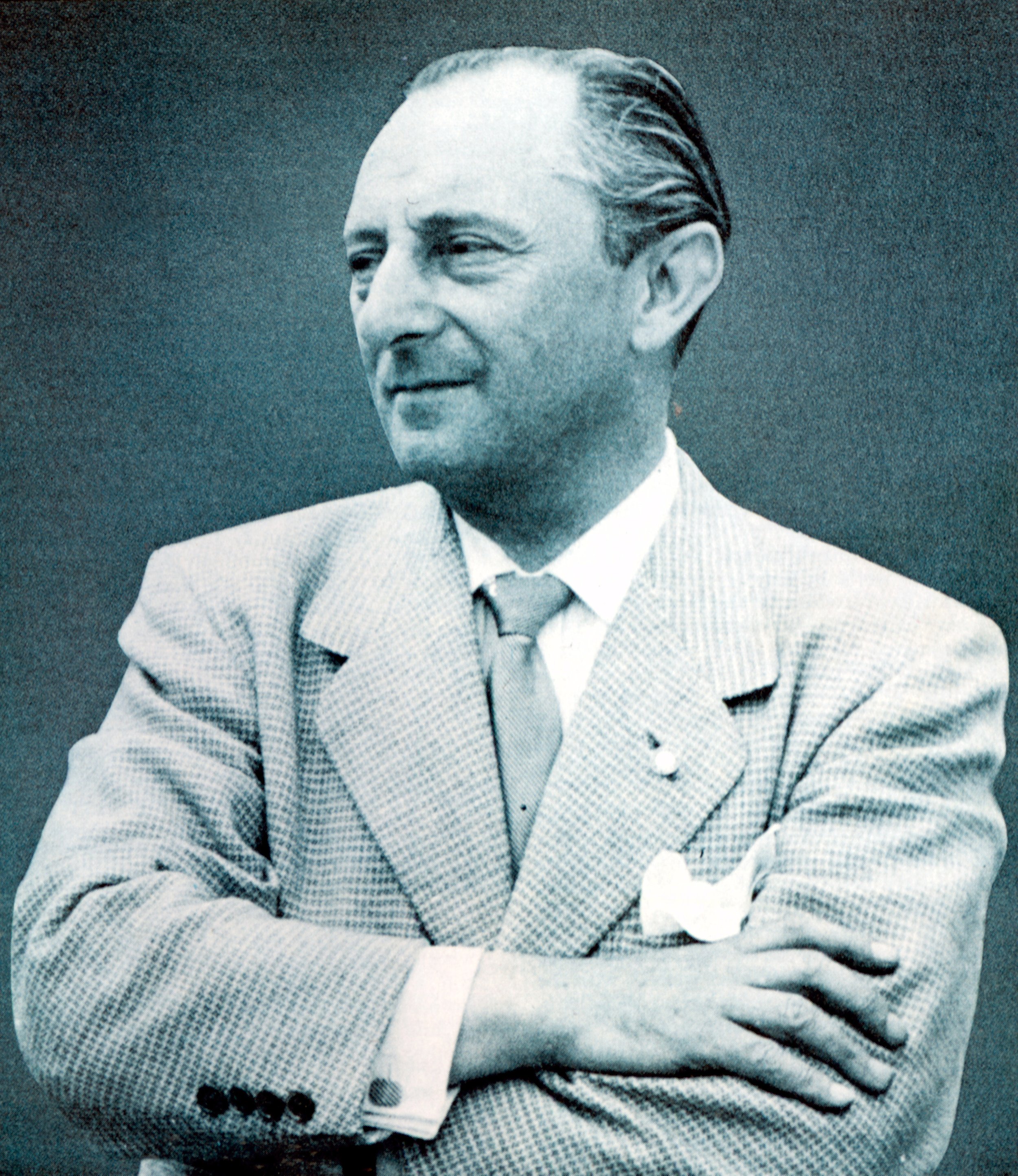
Maximilian Hofman
Photo courtesy of Daimler AG
Within the history of Austrian-American relations, migration has frequently served as a conduit for profound structural influence, and the impact of Austrian entrepreneurship on mid-century American industrial consumerism is epitomized by one pivotal figure: Maximilian Edwin Hoffman.
Hoffman was not merely an importer of cars; he was a cultural tastemaker and a visionary strategist who single-handedly engineered the post-World War II market for European automobiles in the United States. His legacy represents a critical nexus of European engineering, American capital, and sophisticated marketing. Indeed, Hoffman can be regarded as the architect of the transatlantic automotive trade and its impact on the modern American road has been profound.
From Vienna to Manhattan
Maximilian Edwin Hoffmann (he later modified the spelling to Hoffman after moving to the U.S.) was immersed in the nascent European automotive industry from an early age. He was born to a Catholic mother and a Jewish father in Vienna on November 12, 1904. His father originally inherited a grocery store but turned it into a manufacturing business that initially produced sewing machines, but later made motorcycles and bikes. Max made a name for himself in Austria first as a motorcycle and race car driver (driving an Amilcar, a French automobile manufactured from 1921 until 1940). He subsequently established a successful multi-brand car dealership in Vienna that specialized in importing British, French, and Italian marques to Central Europe with considerable success: it was him who convinced Volvo to sell their cars outside of Sweden, and he became the brand’s first European importer. In addition, he also imported American cars into Austria as an agent for a company called Smoliner and Kraky; they brought Duesenberg, Auburn, and Cord (notably all from Indiana), as well as Pontiac to Austria. Hoffman eventually became the exclusive importer for Lancia, Rolls-Royce, Bentley, Alfa Romeo, Talbot, and Vauxhall.
The geopolitical upheavals of the late 1930s disrupted this trajectory. Due to his Jewish heritage, Hoffman was forced to flee Austria following the Anschluss in 1938. After a period in France, he arrived in New York City in 1941. Confronted with a wartime economy that had halted civilian automotive production, Hoffman demonstrated remarkable entrepreneurial adaptability. Utilizing minimal capital, he established a lucrative enterprise manufacturing metallic-plated plastic costume jewelry—a venture that secured the financial foundation necessary for his post-war return to the automotive sector.
Architectural Patronage and Aesthetic Curation
In 1947, Hoffman established Hoffman Motors and turned his attention to introducing war-weary American consumers to the refined engineering of European manufacturers. He understood that marketing high-end foreign vehicles required an environment that elevated the automobile from a utility to an object of fine art.
To achieve this, Hoffman engaged the legendary American architect Frank Lloyd Wright to design his flagship showroom at 430 Park Avenue in New York City. Opened in 1954, the interior featured a dynamic, spiraling ramp that anticipated Wright’s iconic design for the Solomon R. Guggenheim Museum. By placing European machinery within an avant-garde American architectural landscape, Hoffman framed these vehicles as symbols of cosmopolitan sophistication. The partnership extended to private patronage; Wright later designed Hoffman’s mid-century modern residence, Northwind, in Rye, New York, cementing a profound intersection of European commerce and American design history.
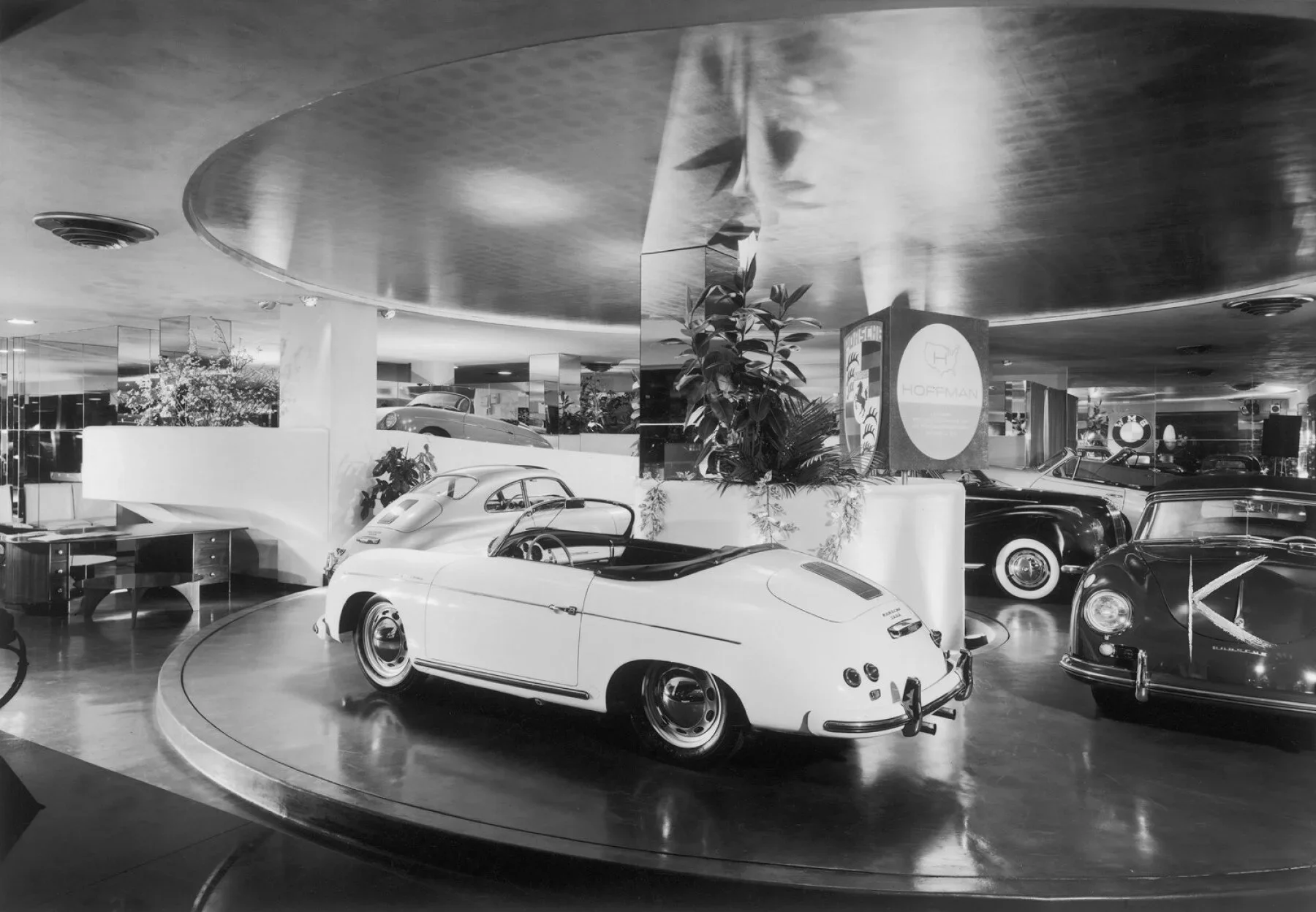
The Frank Lloyd Wright-designed Hoffman Motors showroom in Manhattan.
Photo courtesy of Porsche AG
Market Curation as Industrial Catalyst
Hoffman’s true significance lies in his role as a product planner and a catalyst for industrial adaptation. He rejected the traditional, passive model of distribution. Instead, he leveraged his deep understanding of American consumer behavior and purchasing power to pressure European factories into modifying their product lines specifically for the Western hemisphere, prompting the production of iconic cars that would not have been produced without his doing:
The Mercedes-Benz 300 SL "Gullwing": Mercedes-Benz initially engineered the 300 SL strictly as a racing prototype. Hoffman, recognizing the appetite for high-performance sports cars among affluent Americans, insisted on a road-going production variant. To mitigate the factory's financial hesitation, he placed a firm pre-order for 1,000 units. This intervention birthed one of the most celebrated production sports cars of the 20th century.
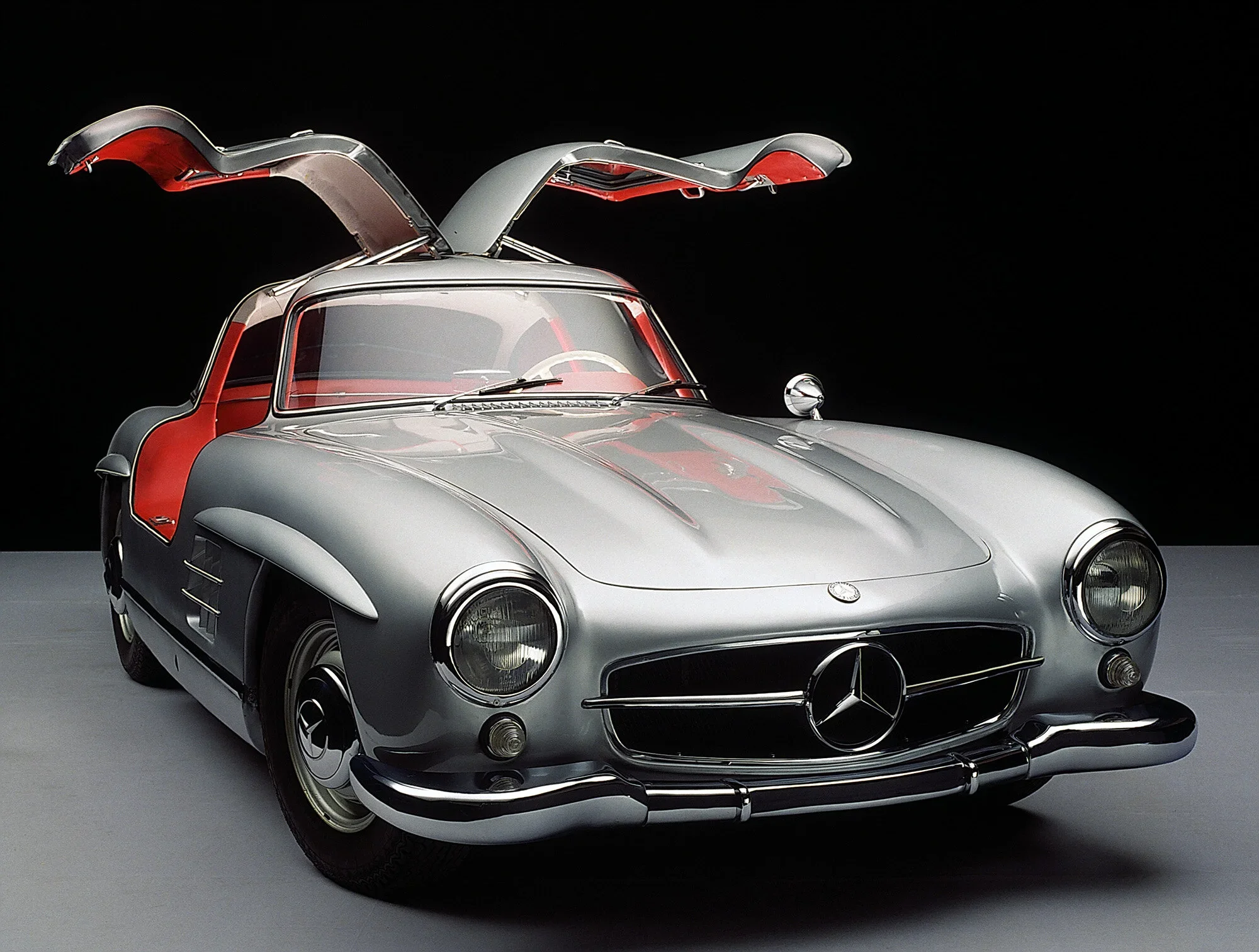
Mercedes-Benz 300 SL “Gullwing”
Photo courtesy of Daimler AG
The Porsche 356 Speedster: In 1950, Ferry Porsche estimated that the American market could absorb perhaps five vehicles per year. Hoffman famously countered that if he could not sell five per week, he would decline the distributorship. Hoffman ultimately accounted for roughly one-third of Porsche's global sales. Furthermore, he identified a demand for an affordable, minimalist variant tailored to the North American amateur racing circuit, directly prompting the creation of the legendary 356 Speedster.
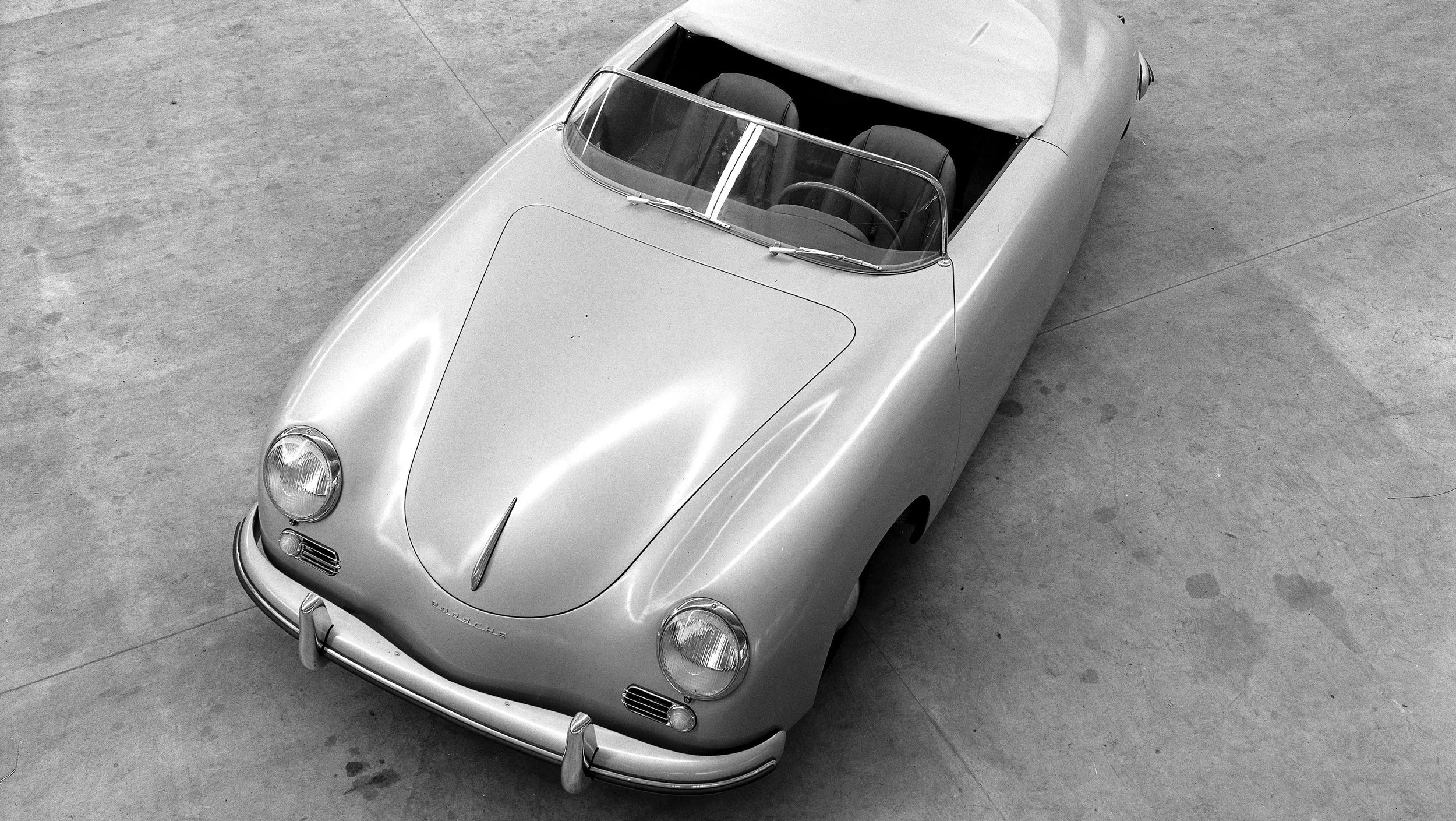
Porsche 356 Speedster
Photo courtesy of Porsche AG
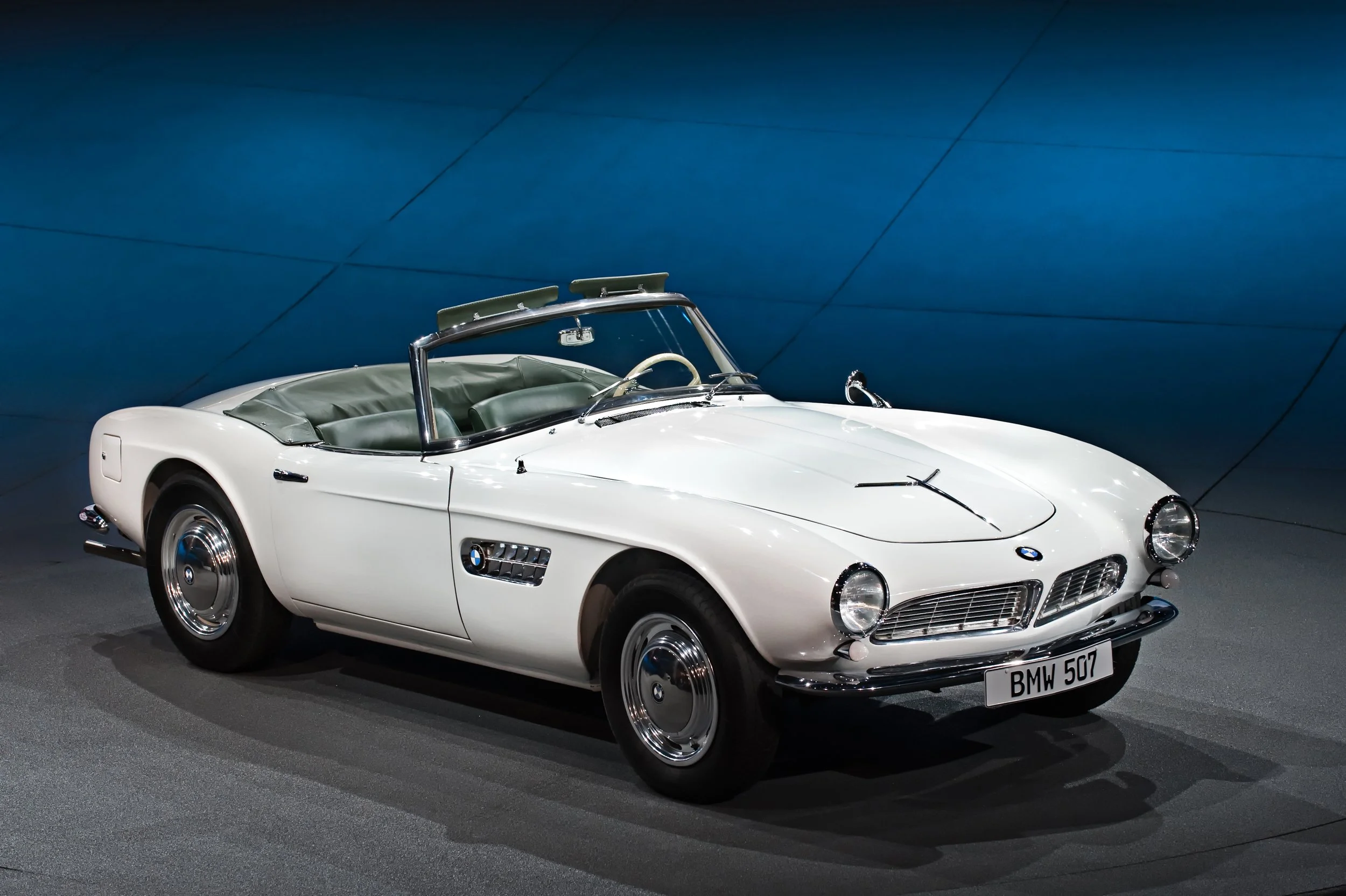
BMW 507
Wikimedia/ Stefan Krause
The BMW 507 and the 2002: Hoffman influenced BMW’s corporate trajectory by advocating for the creation of the elegant 507 roadster, introducing industrial designer Albrecht von Goertz to execute the styling. Later, his insistence on a high-performance, compact sedan for the American market led to the development of the BMW 2002, a vehicle that established the modern sports sedan segment.
"Most of the parade of sports cars that we love today would not have happened if Maxie Hoffman hadn't talked the factories into producing them."
— Bob Lutz, Automotive Executive
The Porsche Connection
The first Porsche sports car ever was built in Austria under difficult circumstances in the buildings of a former sawmill in Gmünd, Carinthia. The company had relocated there from Stuttgart, Germany in 1944 due to the increasing impact of Allied bombings on the city. In remote Gmünd, on the other hand, the effects of the war were considerably more muted and allowed the company to carry on. On June 8, 1948, the first Porsche Roadster 356 was declared street legal there. Fifty-two more were hand-built in that location. Ferry Porsche initially estimated that he could maybe sell a total of 500 units of such a car, but he would be wrong - until 1965, 78,000 Porsche 356 were built. A fellow Austrian on the other side of the Atlantic, Max Hoffman, turned out to be instrumental in establishing Porsche cars in the U.S. market.
“The love story between Porsche and America is inseparably linked to the name of Max Hoffman,” according to Porsche’s corporate communications. During their meeting at the Paris Motor Show in 1950, Ferry Porsche mentioned to Hoffman that he hoped to sell five vehicles in the United States per year. Hoffman responded that he would only be interested in a distribution deal if he could at least sell five cars per week. The two men agreed on an initial contract for the sale of 15 vehicles per year.
Both legend and the Porsche archives maintain that Hoffman impressed upon Ferry Porsche that the brand was lacking an emblem - until then Porsche cars simply bore the name in letters. In 1952, the two men met over lunch in New York City when Ferry Porsche sketched out the company’s now famous emblem on a restaurant napkin, according to official company doctrine (some claim it was Hoffman who did the sketching). It would make its first appearance on the steering wheel hubs of Porsche cars in 1953 and can still be found there today.
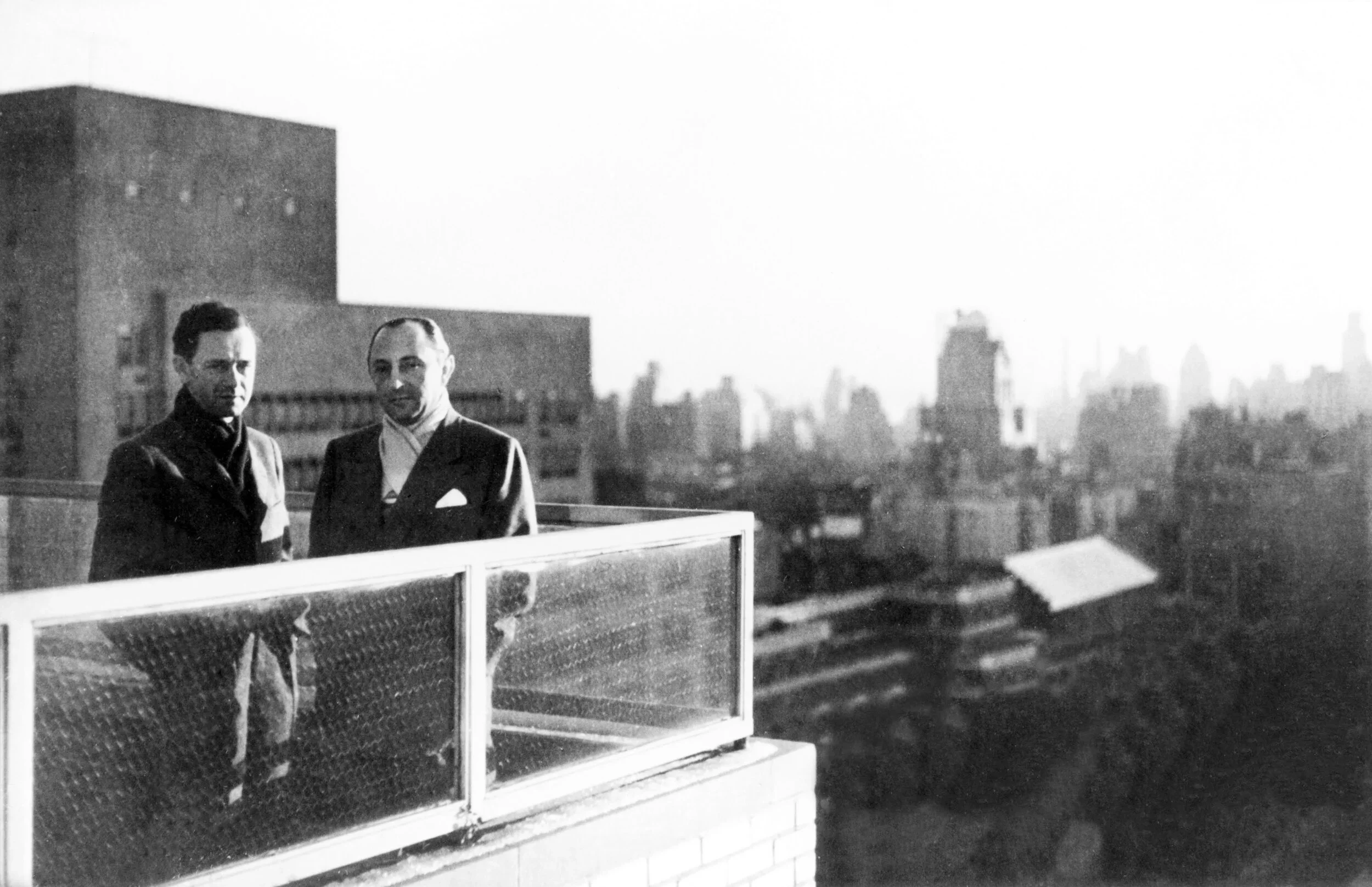
“The love story between Porsche and America is inseparably linked to the name of Max Hoffman.”
Ferry Porsche (left) and Max Hoffman on a Manhattan rooftop, ca. 1952.
Source: Porsche AG
Prior to Hoffman’s intervention, foreign automobiles were a marginal anomaly within a domestic market dominated by Detroit’s industrial hegemony. By the time he divested his corporate interests to BMW of North America in 1975, he had successfully integrated brands such as Jaguar, Volkswagen, Alfa Romeo, Mercedes-Benz, and Porsche into the socio-economic fabric of American life. His contributions were formally institutionalized with his posthumous induction into the Automotive Hall of Fame in 2003.
As the Austrian Embassy marks the historic milestone of USA 250, the narrative of Max Hoffman serves as an exemplary study of the immigrant contribution to American economic vitality. He arrived on American shores as a displaced refugee and, through a combination of cultural synthesis, aesthetic precision, and market acumen, fundamentally transformed the landscape of the American highway.
Select Sources:
Daimler Communications. 2012. Driving force for the 190 SL and 300 SL. Retrieved from
https://media.daimler.com/marsMediaSite/en/instance/ko.xhtml?oid=9916742&relId=1001&resultInfoTypeId=172
Donelly, Jim. 2006. “Max Hofman.” Hemmings Sport & Exotic, March 2006 issue. Retrieved from
https://www.hemmings.com/blog/article/max-hoffman/
Kornblatt, Myles. 2014. Mercedes W113. The Complete Story. Wiltshire: The Crowood Press.
Landenberger, S. 2017. “Internationalisierung und Kulturtransfer von Marken.” Comparativ, 19(6), 33-49. Retrieved from https://www.comparativ.net/v2/article/view/294
Levin, Tony. 2004. The Complete Book of BMW. St Paul, MN: MBI Publishing Company.
Ludvigsen, Karl. 2012. Porsche - Origin of the Species. Cambridge, MA: Bentley Publishers.
Osborne, Donald.2007. “Max Hoffmann Made Imports Less Foreign to Americans.” The New York Times, March 18, 2007, Retrieved from https://www.nytimes.com/2007/03/18/automobiles/18HOFFMAN.html
Porsche. 2018. Porsche in the USA – Max Hoffman. Porsche Newsroom. Retrieved from
https://presskit.porsche.de/anniversaries/en/70-years-porsche-sports-cars/topic/category/praegende-persoenlichkeiten/items/en-porsche-in-the-usa-max-hoffman-642.html
Porsche. 2018. Seventy Years of Style. Porsche Newsroom. Retrieved from
https://newsroom.porsche.com/en/history/porsche-max-hoffman-lloyd-wright-design-356-cabriolet-new-york-usa-import-seventy-years-style-15167.html
Porsche. 2019. Made in Austria. Porsche Newsroom, November 6, 2019. Retrieved from
https://newsroom.porsche.com/de/2019/historie/porsche-911-magazin-episode-13-sportwagen-dna-356-gmuend-19077.html
Press Inform. 2014. “Visionär und Autohändler.” Stern, online. Retrieved from
https://www.stern.de/auto/fahrberichte/max-hoffman-visionaer-und-autohaendler-3841018.html
Storer, William A. 1974. The Architecture of Frank Lloyd Wright: A Complete Catalog. Chicago: The University of Chicago Press.