#Wahrzeichen
(Symbolic Landmarks)
Our blog on unique Austrian landmarks, updated monthly.
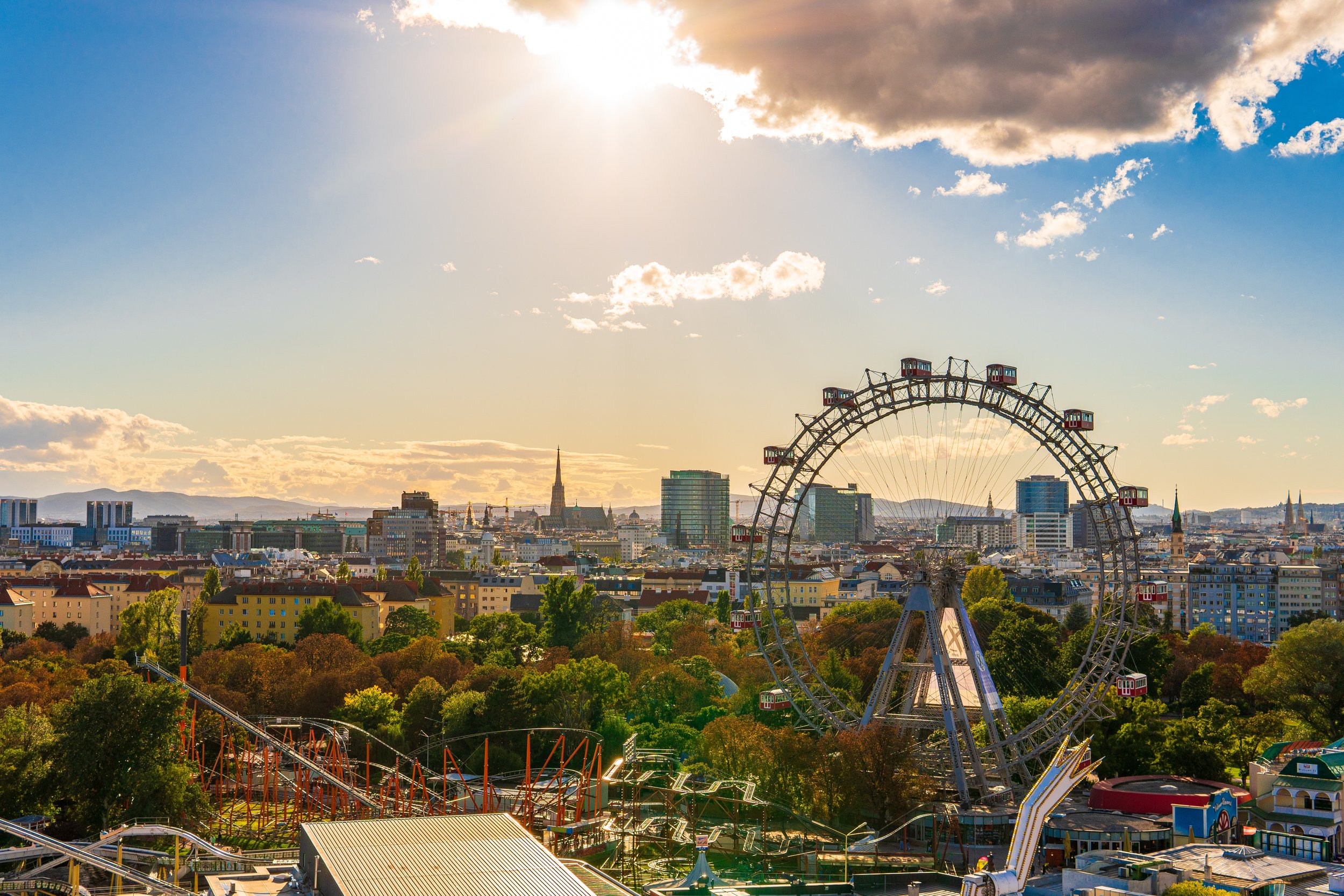
Above: Vienna with View of Iconic Vienna Ferris Wheel © Österreich Werbung

Hohensalzburg Fortress
This week's #Wahrzeichen takes us to the stunning Hohensalzburg Fortress in Salzburg. The fortress sits atop the Festungsberg (fortress hill), high above the rooftops of the baroque historical district. It is the largest fully preserved castle in Central Europe, and offers a 360-degree view of the city and its surroundings.
Stephansdom
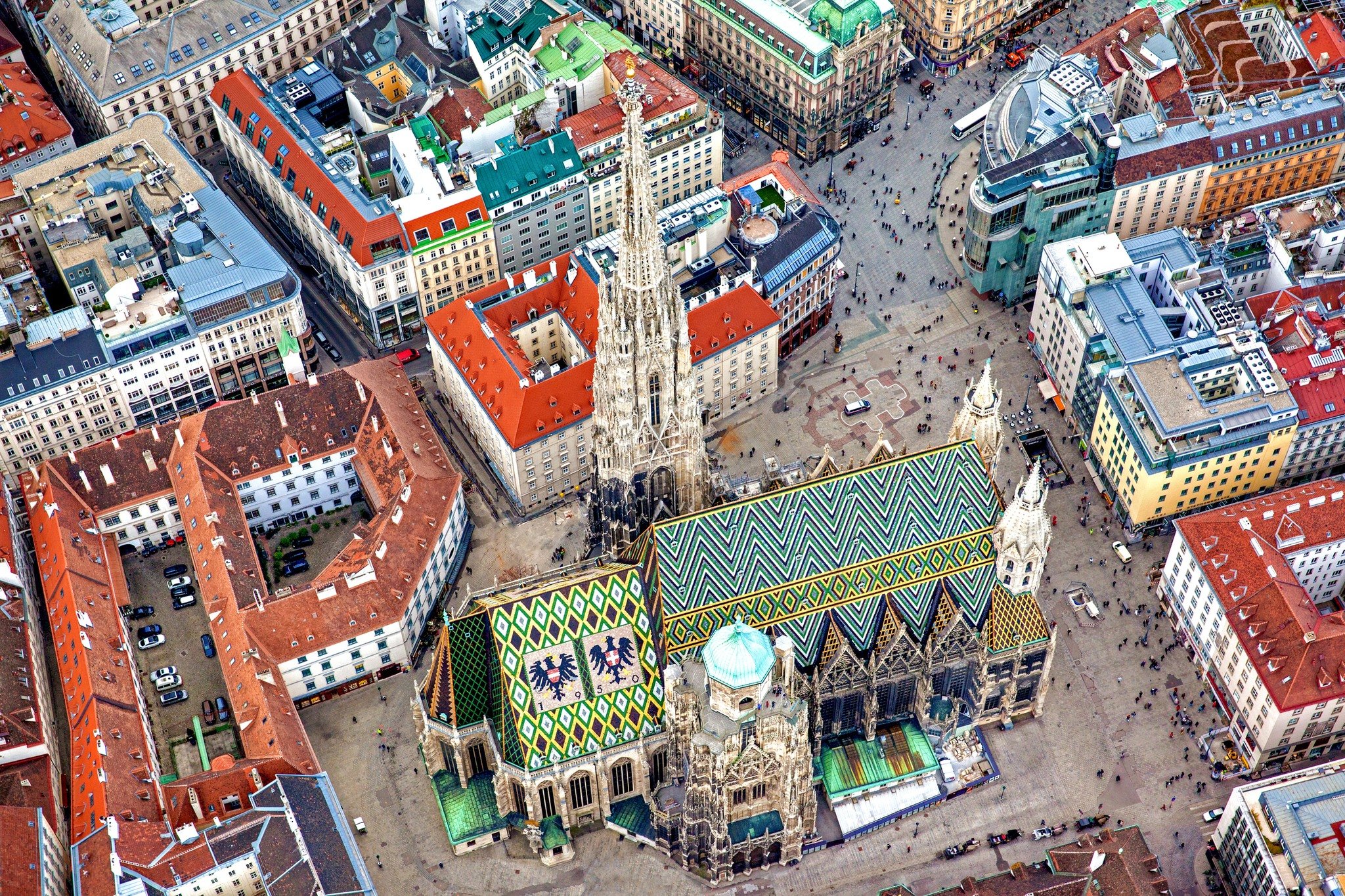
This week's #Wahrzeichen takes us to #Vienna where the iconic #Stephansdom prominently stands in the heart of Vienna's old town. The current church was constructed on the ruins of an older parish church consecrated in 1147. Construction was completed in 1433. A masterpiece of European Gothic architecture, it boasted the tallest tower in Europe at the time until the Strasbourg Cathedral overtook it for the title in 1491. At 447.5 ft tall, no building in Austria-Hungary was permitted to be taller. (Thus, the New Cathedral built 1862-1924 in Linz was built 2 meters shorter.) During the Second World War, Stephansdom was damaged; repairs were completed in 1976.
Goldenes Dachl
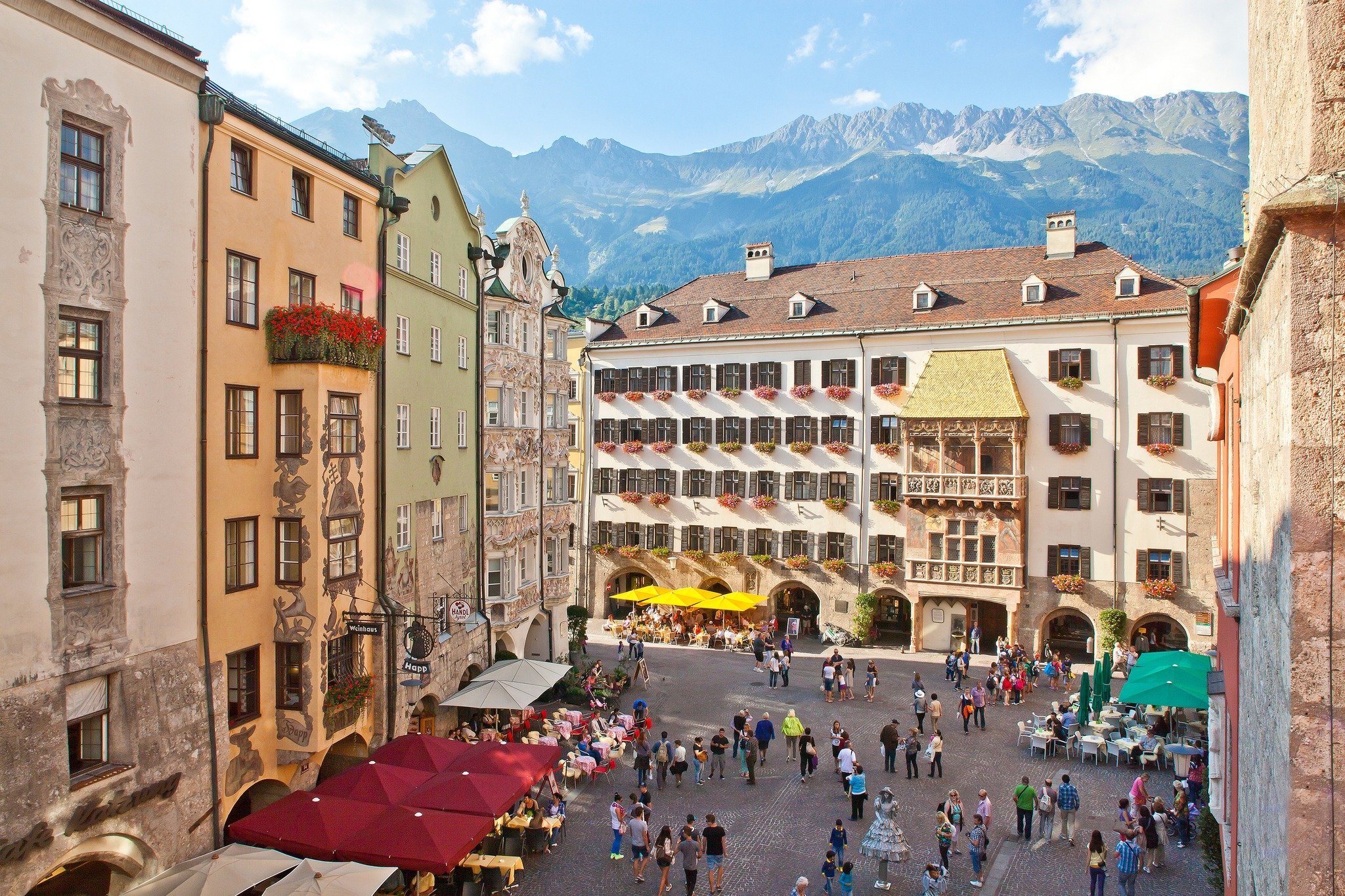
Centrally located in Innsbruck's Altstadt (old town), the Goldenes Dachl (Golden roof) is the city's most iconic and famous landmark.
The building itself was built in the early 15th century as the residence of the princes of Tyrol (Landesfürsten). Holy Roman Emperor Maximilian I commissioned the golden roof in 1493 in honor of his marriage to his third wife Bianca Maria Sforza of Milan. The golden roof was built with 2,657 fire-gilded copper tiles and was meant to to serve as a royal box where the Emperor and his entourage could sit and enjoy festivals, tournaments, and other events that took place in the square below.
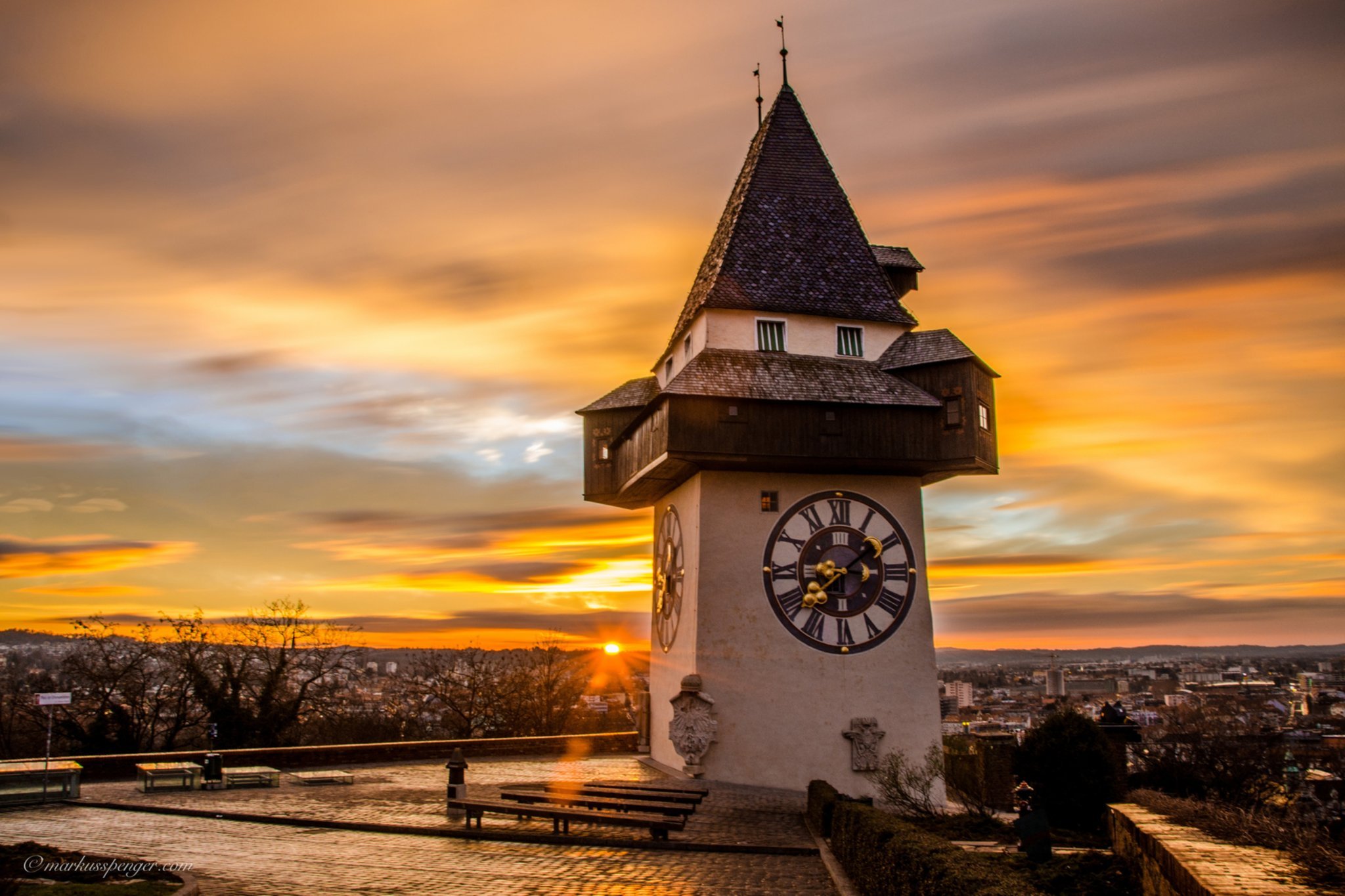
Grazer Uhrturm
The Grazer Uhrturm sits on the castle hill Schloßberg overlooking Graz' old town. Formerly the site of a fortress, it is now a public park that offers stunning views of both the city and the surrounding mountains.
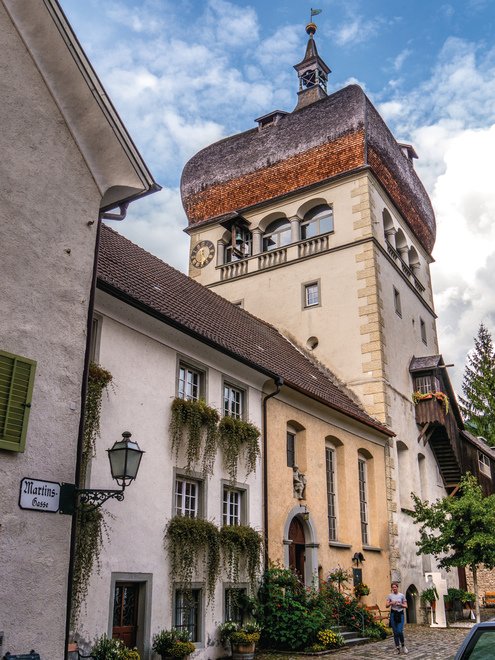
Martinsturm
The Martinsturm, built first as a small tower in the 13th century during the construction of the city wall, was originally used as a fortified house for nobles, and was converted into a chapel in 1362 and renovated in 1601 in the baroque style by master builder Benedetto Prato, who gave the tower its characteristic onion-shaped dome. It was the first baroque building on the Bodensee lake and the largest onion dome tower at the time in all of Central Europe. Since 2015, the interior of the Martinsturm has served as a city museum, but has been a local #Wahrzeichen since long before that.
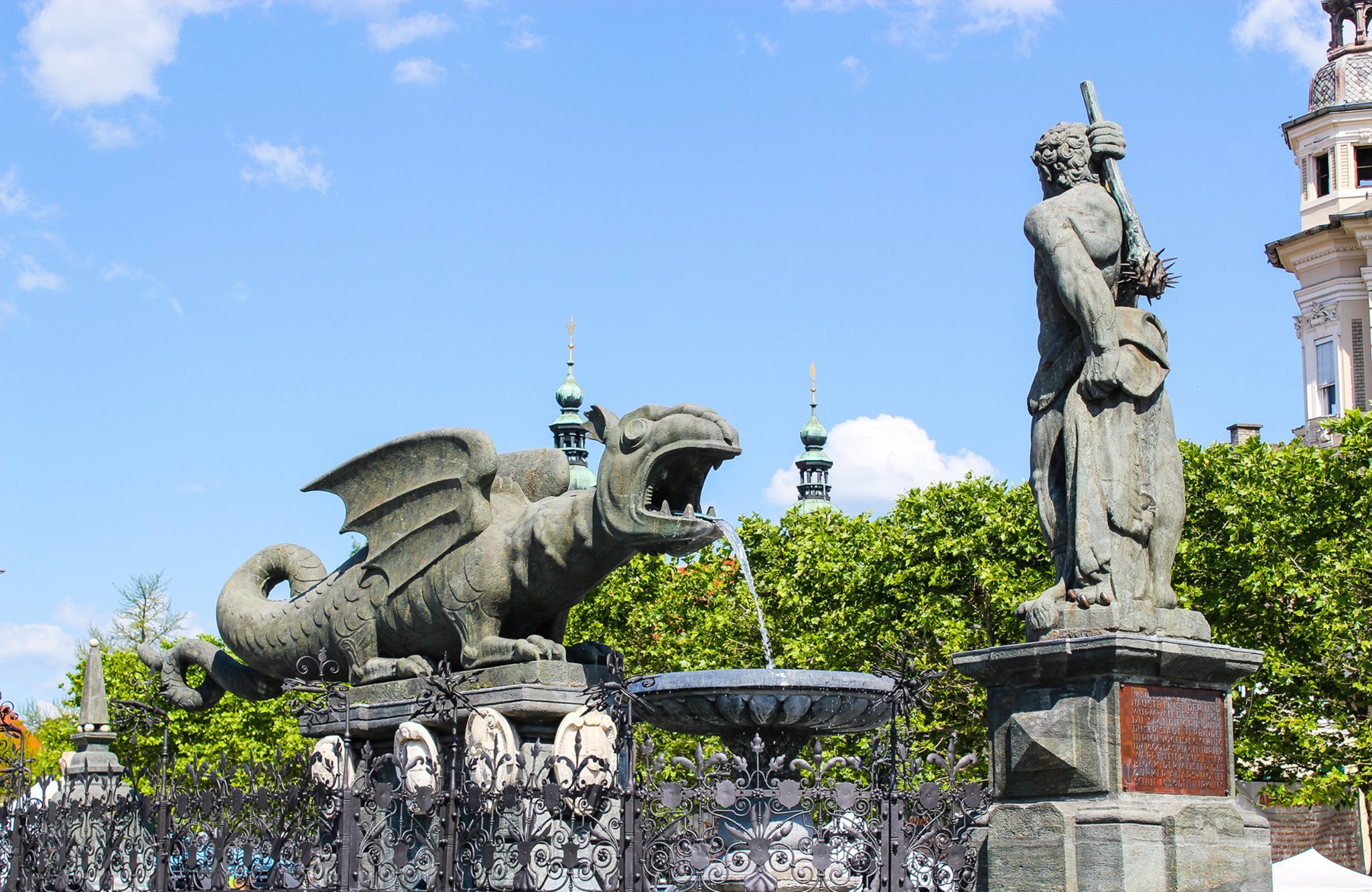
The Lindwurm Dragon
Local legend tells of the mythical founding of the city in a marshy area plagued by a dragon, which made crossing the river Glan a "crossing of wailing" (Klage=lamenting/wailing, Furt=crossing/ford). Allegedly, the local duke built a tower for safety and hired knights to kill it by “fishing” for it with a chain and hook that connected the tower to a bull for bait. After it took the bait, the knights surrounded and killed the creature. The dragon and tower came to symbolize the city of Klagenfurt.
About #Wahrzeichen
A Wahrzeichen can be translated as a typical landmark. This series introduces Austrian Wahrzeichen from across the country with a brief explanation regarding their history and background. New Wahrzeichen are introduced at least once a month.